






From three runners-up to champions: Arsenal close the 22-year Premier League gap
Arteta’s third try at the title arrived quietly on Tuesday night, settled by Haaland’s stoppage-time equaliser at the Vitality. Six years of building, three second places and one summer rebuild later, the Premier League trophy is going back to north London for the first time since the Invincibles.
May 19, 2026
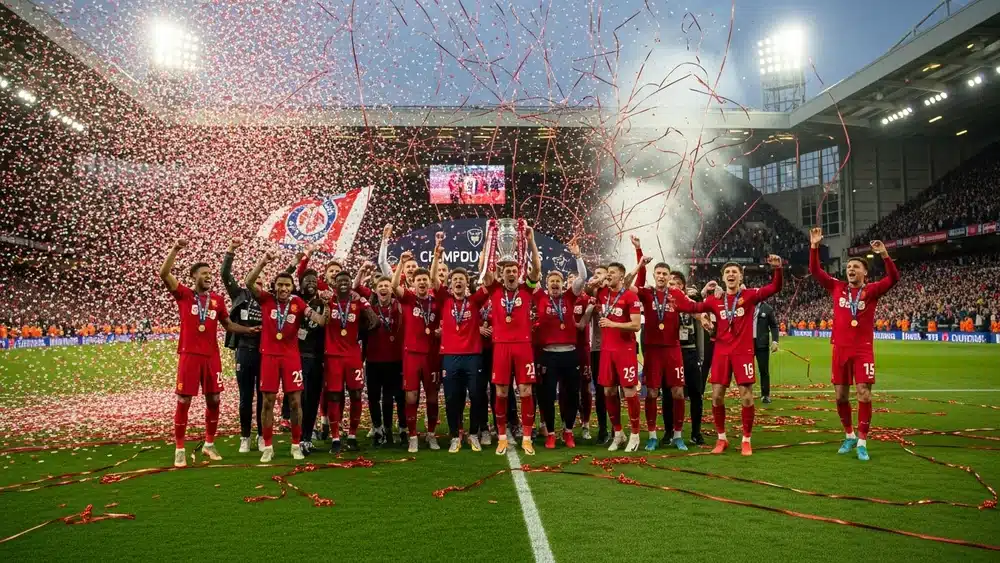
Mikel Arteta watched Arsenal become Premier League champions from his living room. Burnley had been put away on Monday night, the players had gone home, and Tuesday’s title was always going to be settled at Vitality Stadium by other people. When Erling Haaland’s stoppage-time equaliser confirmed Manchester City could not catch them, Arsenal’s first top-flight crown in 22 years arrived quietly, in someone else’s stadium, with the manager off-duty.
It is a strange way to end one of the longest title droughts in the club’s modern history. It is also fitting, in a season where Arsenal did most of the heavy lifting in November and December and held off everyone else later by inches.
Six years on the touchline, three runner-up medals
Arteta was appointed in December 2019, six years and five months ago, by which point Arsenal had become a punchline. He had played for the club between 2011 and 2016 and gone straight from Pep Guardiola’s coaching staff at City into the Emirates job with no head-coach experience. The first eighteen months were rough. The 2022-23 second-place finish after collapsing a January lead felt like the project’s high point and proof at the same time that the gap to the very top was still there.
Then came two more silver medals. Arsenal finished two points behind City in 2023-24, then again as runners-up in 2024-25, becoming the first club in English top-flight history to finish second three years running on two separate occasions. The other run had been 1999 to 2001, also at Arsenal, also under a foreign manager promising more.
The summer that reshaped the squad
The 2025 window was the one Arsenal had been backing into for three years. Martin Zubimendi arrived from Real Sociedad for around 51 million pounds and finally gave the midfield a defensive anchor it had been missing since Thomas Partey’s departure on a free transfer the previous summer. Viktor Gyokeres came in from Sporting CP off the back of 39 goals in the Portuguese league and ended the years-long search for a number nine who scored.
Noni Madueke crossed London from Chelsea for around 52 million pounds for wide depth. Eberechi Eze was prised from Crystal Palace ahead of Tottenham. Christian Norgaard came in from Brentford for midfield cover, Cristhian Mosquera from Valencia for the back four, and Kepa Arrizabalaga arrived from Chelsea to back up David Raya. Six new bodies, every one of them addressing a problem the squad had spent three runners-up campaigns hiding.
The April wobble that almost ruined it
The title was nearly lost in eleven days. Arsenal had built a nine-point lead by early April and watched it shrink to three after a 2-1 home defeat to Bournemouth on the 11th and a 2-1 loss at the Etihad eight days later. The Premier League column on most title-race websites started flipping back to City. Arteta’s response was the only one that mattered. Four wins in four matches followed, and the lead was rebuilt before May arrived.
The defensive numbers underwrote everything. Arsenal conceded 26 goals across 37 matches, the fewest in the division. Raya won the Golden Glove. Twenty-five wins is a league high. The team that spent three years finishing second built its title around not losing.
The Wenger reference
The title is Arsenal’s 14th English championship and their first since Arsene Wenger’s Invincibles went unbeaten in 2003-04. Arteta’s side will not match that record. They have been beaten five times this season, twice in April when the lead nearly collapsed. The comparison still gets made, partly because nobody has ended an Arsenal title drought of this length before, partly because there is one more night left to play.
Paris Saint-Germain stand between Arsenal and a first Champions League trophy at the Puskas Arena in Budapest on May 30. Win that, and the conversation about where 2025-26 ranks in the club’s history opens up properly. Lose it, and the league title still doesn’t budge. Twenty-two years was always going to be the headline.