








Two World Cups, two group exits: India can’t keep delaying their T20 rebuild
India just won the 50-over World Cup, but a second straight group-stage exit at the Women’s T20 World Cup shows the shortest format still exposes the same weaknesses. Something has to change.
Jul 1, 2026
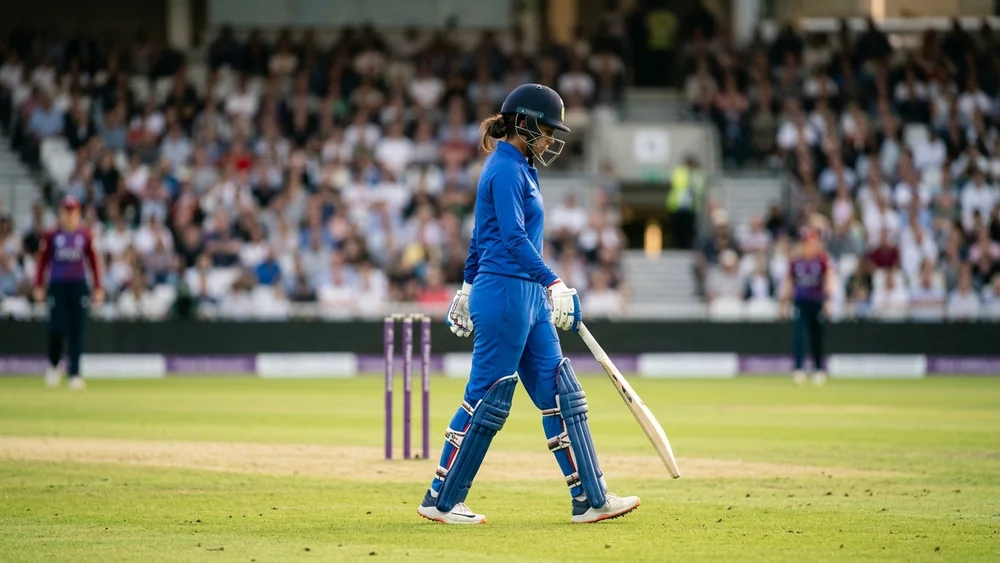
Eight months ago India were world champions. They lifted the 50-over World Cup on home soil, and for a while it felt like the long wait for a global title had finally shifted something. Then the T20 World Cup came around, and India walked into the same wall they hit last time. Out in the group stage, again. Two T20 World Cups in a row now, two group-stage exits, and the questions are starting to sound familiar.
The manner of it stung more than the result. Needing a win over Australia in their last group game to stay alive, India posted 170 for 4 and could not defend it. Australia knocked it off with six wickets and an over to spare. You do not lose from there because you were outgunned. You lose because the finish was not good enough, and India’s finishes keep letting them down at exactly the moment the tournament asks a real question.
The top order carries too much
Look at how India built that 170. Smriti Mandhana and Shafali Verma gave them a flying start with a stand of 66, and Harmanpreet Kaur added a ferocious 56 off 27 balls to drag the total up. On paper, a strong effort. Underneath it, the same old story: when the openers and the captain fire, India look the part, and when a couple of them go early, the middle order rarely bails them out.
That imbalance has been India’s tax for years. The batting is genuinely dangerous at the top and thin in the middle, so every innings feels like it is riding on Mandhana or Harmanpreet doing something special. Against the best sides, that is not a plan, it is a hope. Australia and England have five or six players who can win a game from nowhere. India, too often, have two.
Fielding keeps handing games away
Then there is the fielding, and this is the part that should worry the management most. India put down eleven catches across the tournament, a catching efficiency of around 71 per cent, among the worst of any side in England. In a format where one dropped chance can swing an entire chase, that is not bad luck. That is a habit, and habits cost you knockouts.
It is the least glamorous fix in cricket and the most obvious one. You cannot always coach a middle order into form overnight, but you can hold your catches, and India’s inability to do that turned tight games into losses more than once this summer.
A T20 side still playing 50-over cricket
The deeper issue is one of approach. This is a group that thinks and moves like a 50-over team, because that is the format it just conquered. Head coach Amol Muzumdar has a settled, experienced core, but experience cuts both ways when the game has sped up around you. The modern women’s T20 game is about relentless intent from ball one and depth that lets you attack without fear. India still play the percentages a beat too long, then try to make it up at the death.
Winning the ODI World Cup may even have masked the problem. It is easy to tell yourself the T20 results will follow when you are holding a trophy. They have not, and pretending the two formats are the same team wearing different shirts is exactly how you end up back here.
Where India go from here
Harmanpreet was honest afterwards. “We didn’t play to our standards. As a group we really need to rethink a lot of things,” she said, pointing to how India keep leaking runs in the closing overs against the best teams. She is right, and the rethink has to be bigger than one selection meeting.
Harmanpreet is set to lead India again at the Asian Games later this year, so there is no immediate captaincy upheaval coming, whatever the noise around Mandhana as a future leader. That is fine. The bigger job is blooding middle-order batters who can strike at pace, drilling the fielding until it stops being a liability, and letting this side play T20 cricket like it is 2026, not 2017. India have the talent to win one of these tournaments. They will keep watching from home in the knockouts until they stop treating the shortest format as an afterthought.