






Shingate eyes elusive Asian Games gold as India’s women’s kabaddi team embrace scientific training
Indian women’s kabaddi captain Sonali Shingate says a week long training camp at the Inspire Institute of Sport in Bellary has introduced scientific recovery methods that most players had never experienced before, giving the team renewed belief ahead of the 2026 Asian Games in Nagoya.
Apr 5, 2026
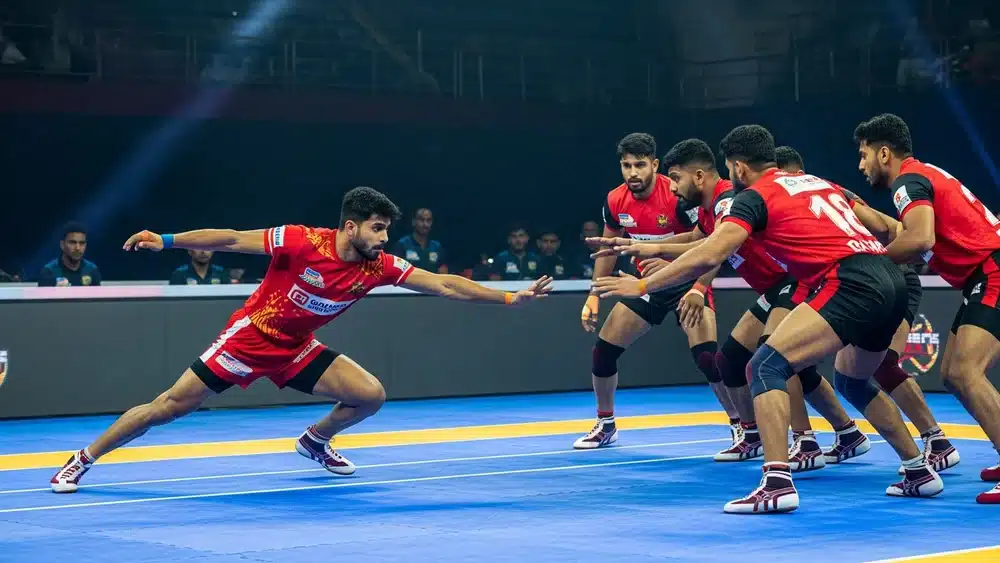
Shingate, 30, led India to the Asian Championship title in Tehran in 2025 and was part of the World Cup-winning squad in Dhaka the same year. She has a silver medal from the 2018 Asian Games in Jakarta. The one gap in her collection is gold, and the Nagoya Games later this year are her shot at filling it.
“In all the camps I have been part of in my career, I have never seen such a campus, nor have I seen such facilities,” Shingate told Outlook India after the camp wrapped up on April 2. The sessions were organised by the Amateur Kabaddi Federation of India and Mashal Sports, who run the Pro Kabaddi League.
Smart work over hard work
The camp brought together 90 elite male and female athletes identified as Asian Games probables. For many, it was their first exposure to structured strength and conditioning programmes built around data rather than intuition.
“We were taught to do smart work, rather than hard work,” Shingate said. The training included box jumps, hang high pulls, squats and deadlifts alongside cycling and rowing for endurance. Recovery sessions featured ice baths, sauna and swimming, all monitored by sports science staff at the IIS campus.
“If your muscles are strong, they will protect you from injuries on the mat,” she added. That sentiment carries personal weight. In 2023, an ACL tear struck just 10 days before the Hangzhou Asian Games. She had spent months preparing for the tournament only to watch from the sidelines as India competed without their captain.
Comeback and redemption
The rehabilitation was long, but Shingate made it back in time for the 2025 Asian Championship, where she captained India to gold in Tehran. The World Cup win in Dhaka followed soon after. Both trophies validated the comeback, yet neither is the prize she wants most.
An Asian Games gold has eluded Indian women’s kabaddi before. The silver in Jakarta stung, and missing Hangzhou altogether made it worse. Shingate sees the scientific approach adopted at IIS as a genuine shift in how the team prepares.
Competition at every session
“In camps, we have to perform every day to prove ourselves, as all the players invited are creme de la creme,” she said. The squad remains unsettled, with selection spots genuinely up for grabs heading into the Asian Games cycle.
Shingate also made a pointed case for a women’s professional kabaddi league. “People say that there are not enough players for a women’s league but I don’t agree,” she said. The PKL has given men’s kabaddi a financial and commercial platform. Women’s kabaddi, she believes, deserves the same.
For now, though, the focus is on Nagoya. The gold medal that has slipped away twice is still within reach, and the Indian women’s team has never been better prepared to chase it.