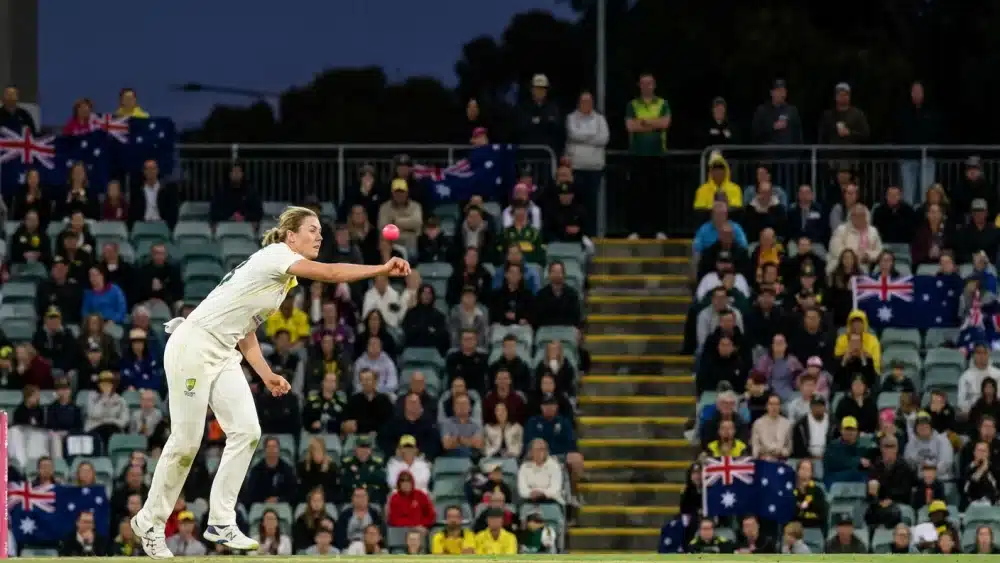



Mixed soil, dew and big boundaries: what the Ahmedabad pitch means for Sunday's T20 World Cup final
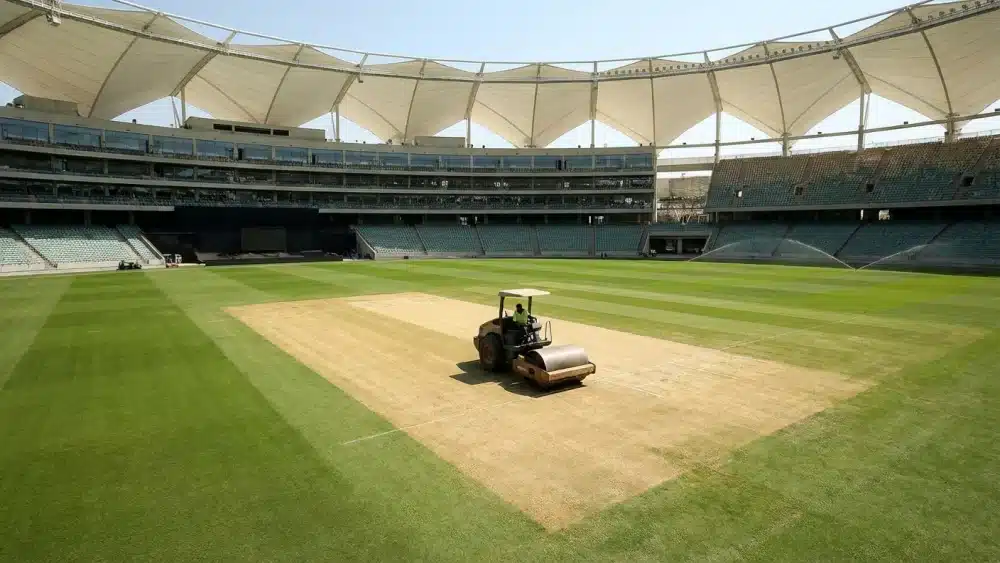
When India and New Zealand walk out for the T20 World Cup final at the Narendra Modi Stadium in Ahmedabad on March 8, the pitch will be as much a talking point as the players on it. The BCCI has opted for a mixed-soil surface blending red and black soil, and the choice tells you plenty about what to expect.
What the mixed soil pitch means
Red soil produces a harder, bouncier surface that tends to favour batting and pace bowling. Black soil grips and turns, giving spinners something to work with as the match goes on. Blend the two together and you get a pitch that should start flat but offer more as the ball gets older and the surface wears.
In T20 internationals at this ground, first-innings scores have averaged around 188. That number drops sharply in second innings, where the average sits closer to 152. Teams batting first have won 8 of 13 T20I matches here, which makes the toss a significant factor.
Dew could decide the toss
Ahmedabad's evenings bring heavy dew, and the final is a night match with a 7pm local start. If dew settles in the second innings, the ball gets slippery for bowlers and skids onto the bat, making chasing easier. But the first-innings batting record at this ground suggests that putting runs on the board is the safer option.
Suryakumar Yadav will know his ground well from years of IPL cricket. If India win the toss, the numbers say bat first and trust the bowling attack to defend. Mitchell Santner will be weighing the same data, but New Zealand's semi-final demolition of South Africa showed they can chase anything when Finn Allen gets going.
Bumrah and spin hold the key for India
Jasprit Bumrah will be central to India's plans regardless of the conditions. His ability to take pace off and hit awkward lengths makes him effective on any surface. But the black soil element of this pitch could be the real story. Varun Chakravarthy and Axar Patel will look to exploit any turn on offer, especially in the middle overs when the ball is roughed up.
India's batting depth has been tested in this tournament. Sanju Samson was the hero of the semi-final against England, and the top order of Abhishek Sharma and Tilak Varma gives them options against both pace and spin.
New Zealand's pace and the Allen factor
New Zealand will back their own spinners too. Santner and Ish Sodhi have the experience to use any grip in the surface. The Narendra Modi Stadium has some of the biggest boundaries in world cricket, with square boundaries around 67 metres and straight ones stretching past 75, so clearing the rope consistently takes serious power.
But the X-factor is Allen. His record-breaking century against South Africa in the semi-final showed what happens when he connects. If the pitch is true and the ball comes on, Allen could take the game away from India before the spinners even come into play.
The pitch, the dew, and the toss. Whoever reads the conditions better on Sunday evening will have a real advantage.