RCB and GT are level on 16 points and the race for IPL 2026 top spot has gone to net run rate
rcb gt ipl 2026 top spot nrr race

Royal Challengers Bengaluru and Gujarat Titans are level on 16 points after 12 games each, with two matches still to play, and the race for the top of the IPL 2026 table has narrowed to net run rate and a handful of fixtures. RCB hold the top spot on a NRR of +1.053 after their six-wicket win over KKR earlier this week, with GT just behind. The Eden Gardens trip on Saturday for GT and a Dharamsala date for RCB on Sunday will start telling us which of them ends the league stage with the Qualifier 1 berth.

Why finishing top two is the only seeding that matters

The IPL playoff bracket has not changed: the top two play Qualifier 1 with a direct route to the final, and the loser drops into Qualifier 2 against the Eliminator winner. The third and fourth-placed sides play the Eliminator and need to win two knockouts in three days to reach the final. RCB and GT have essentially booked the easier half of that bracket already, and the only question is which of them gets the second life and which gets sent down the other side. For two teams that have led the table for stretches of this campaign, finishing third instead of second would be a real penalty after a 12-game run that has been the most consistent in the league.

RCB lead on a thin NRR margin

RCB's NRR of +1.053 puts them a touch ahead of GT, but the gap is small enough that a single chase in 16 overs or a couple of close losses can flip it. RCB's run has been built on Virat Kohli's recent form, including the unbeaten 105 against KKR that pushed them back to the top, and a bowling group that has held opposition totals down at home. GT's case is the GT case: Sai Sudharsan at the top, Washington Sundar in the middle, Rashid Khan strangling the middle overs, and Mohammed Siraj and Prasidh Krishna handling the new ball and the back end. Both sides have been the form sides of the back half of the season.

Two games, two NRR swings, one Qualifier 1 ticket

The fixture list does the rest. GT travel to Eden Gardens on Saturday for a KKR side that needs the win to keep its slim playoff hopes mathematically alive; RCB head to Dharamsala on Sunday for a Punjab Kings outfit on a five-match losing streak and still chasing a top-four berth. Neither match is a free hit, and either result can move the NRR margin in a way that matters. Both teams then have one more fixture to round out their league stage, which means the Qualifier 1 spot will probably go to whoever wins two of the next two outright, or to RCB on net run rate if the season ends level. For everyone else still in the playoff scramble, the second half of this race matters too: RCB and GT slipping on NRR is one of the few ways the chasing pack changes the qualification math now that 16 points has effectively been locked as the top-two cutoff.
More IPL 2026 analysis from Sportsadda

Eight teams, four spots, ten days: how the IPL 2026 playoff race actually sits with two rounds left

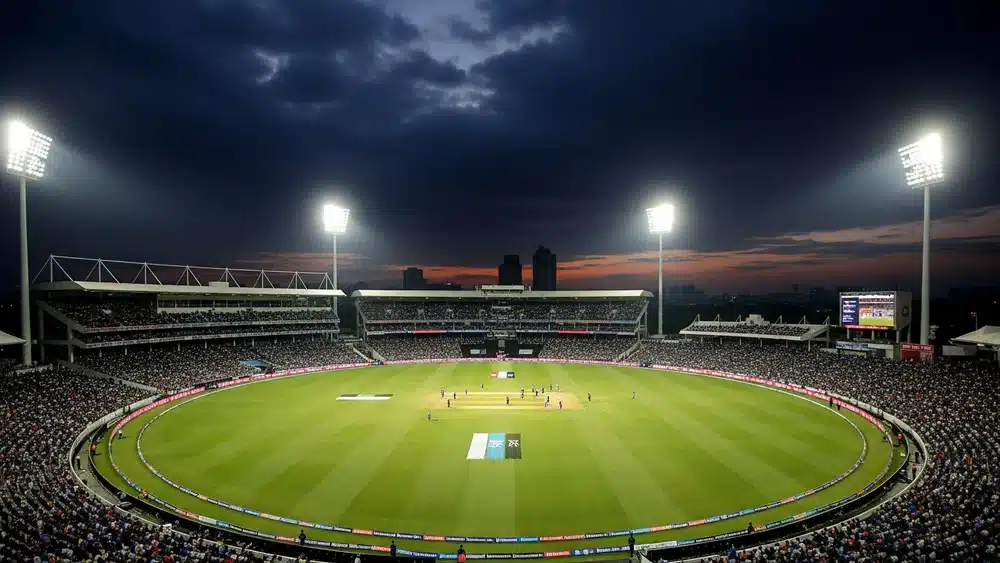
ipl 2026 playoff race stadium night

Two teams have been knocked out, eight are still alive, and four spots will be claimed in the next ten days. The IPL 2026 playoff race has narrowed to the bit nobody can wing through anymore, and with every team having two group games left, the points table reads more like a knife-fight than a league standing.

Royal Challengers Bengaluru sit top with 16 points from 12 games and the best net run rate in the competition. Gujarat Titans are level on 16 with a healthier NRR than most. Sunrisers Hyderabad are on 14, Punjab Kings on 13, and behind them sit four more teams whose path to the top four runs through the same fixtures the leaders have to navigate.

RCB and GT have the cushion, not the certainty

RCB's last-ball win over Mumbai on Sunday and Virat Kohli's century in the record chase against Kolkata on Wednesday have put them top with a buffer that did not exist a week ago. Sixteen points and a +1.053 NRR is a strong place to be, but it is not a sealed playoff spot. Four other teams can still reach 16 if results break the right way, and the qualifier-one race for the top two also runs through this week.

Gujarat Titans are in a similar shape. Sixteen points, twelve played, on a five-match winning streak, and with two remaining games that fall against teams chasing them rather than against the leaders. Shubman Gill's side have a trip to KKR and a home game against CSK left to navigate, which is the kind of run-in a top side wants. NRR is lower than RCB's at +0.551, which would matter if two teams finish on the same points total.

SRH and PBKS need wins, not just results elsewhere

Sunrisers Hyderabad on 14 points are the third team in shape to push the top two. Six wins in their last seven games has covered up some of the early-season volatility, but the GT loss on Tuesday was a setback and the remaining two fixtures, away to CSK and home to RCB, are not a soft draw. One more win takes them to 16 and into the conversation. Two wins almost certainly seals it.

Punjab Kings have made it harder on themselves than this needed to be. They were unbeaten through their first seven games, the best start of any side in any IPL season, and then lost five on the bounce. The Dharamsala defeat to Mumbai on Thursday dropped them to 13 points with two games left. PBKS still control their fate in the math; if they win both remaining games, they get to 17 and that is enough on any plausible NRR scenario. But the form line is going the wrong way, and a single slip now will hand their playoff spot to one of the four teams behind them.

The chasing pack who still believe

Below the top four sit Chennai Super Kings, Rajasthan Royals, Delhi Capitals and Kolkata Knight Riders. CSK are the loudest of the four. After starting 0-3, they have won six of their last eight to drag themselves back into the picture, and Friday's trip to Lucknow is the kind of game that can rebuild a season. Two more wins gets them to 16; whether 16 is enough will come down to how the games above them go.

Rajasthan Royals and Delhi Capitals are in the corridor where two wins could be enough, and one win almost certainly is not. KKR are the longest shot, on the lowest of the four totals and with the toughest path. The shorthand is the same for all four: win both remaining games and hope two of the four teams ahead of you slip up. None of them control their own fate.

Why 16 is the magic number

The math is simple once you accept it. Sixteen points is the threshold every team is working toward because in a 10-team, 14-game league, 16 points is the level that historically guarantees a top-four finish in almost every scenario. With four teams already on 13 or above and four more in striking distance of 14, an awful lot of the playoff fight will be settled by NRR if multiple teams finish level.

RCB sit best placed on that front. Their NRR cushion of +1.053 means a one-game slip can be absorbed in a way that nobody else's NRR allows for. GT, SRH and PBKS are all within a margin where one heavy defeat could move them down the order on tiebreak alone. The mid-table chase is even more brutal: CSK, RR and DC have NRRs that range from healthy to neutral, and KKR's is negative, which means KKR effectively need to win both remaining games by a sizeable margin to even enter the NRR fight.

What to watch this week

Friday's LSG-CSK has direct consequences for the bottom of the top four. SRH travel to CSK in a game that could send either side toward 16 or out of the picture. RCB visit PBKS in a fixture that could end one of their playoff hopes and confirm the other's. By Sunday, two of the eight teams in contention should be clearer to read; by midweek next, three of the four playoff slots will be locked, and the last one will probably be decided on a final day where the math is the headline.

It is the version of the IPL group stage the league has wanted for years: every match still counts for someone, and the bottom of the top four is closer than the top of the bottom six. Sixteen points is the doorway. Whoever does not walk through it does not get to play in Dharamsala on May 26.

More cricket features from Sportsadda

After 101, 57 and now 75 not out, Tilak Varma is the through-line MI can take from a broken IPL 2026

tilak varma mi ipl 2026 feature may14

Mumbai Indians went out of the IPL 2026 playoff race four days ago. Three different players have led them this season, their bowling group has been rebuilt mid-season and the only top-order batter playing with any sustained calm is 23 years old. Tilak Varma's unbeaten 75 off 33 against Punjab Kings on Thursday is the third major knock of his last few weeks, and it is starting to feel like a season-long argument that Mumbai's most valuable batter is no longer the man whose number is on most of the kids' shirts.

The three knocks tell their own story. On 20 April at the Narendra Modi Stadium, Tilak walked in at 103 for 4 and crawled to 17 off 20 balls, then hammered 84 off his next 25 to finish on 101 not out off 45. It tied Sanath Jayasuriya's 45-ball MI century from 2008 as the joint-quickest by a Mumbai batter; the 82 runs he took off the last six overs were the most by any player in that window in IPL history, beating Quinton de Kock's 80 against KKR in 2022. ESPNcricinfo logged the 251-point strike-rate jump between his two phases as the largest of its kind ever recorded in an IPL innings.

The slow start, the big finish

That GT knock has been the template. Against Royal Challengers Bengaluru at Raipur three weeks later, Tilak made 57 off 42 in the loss that knocked Mumbai out of the IPL 2026 playoff race, again building before kicking on. Against Punjab on Thursday he reached his fifty off 25 balls and then took 25 more off the next eight, including the two sixes off Xavier Bartlett in the final over that won the match with a ball to spare. The strike-rate split is what separates him from the team's slogging tail: he gives himself time, then plays without the panic that flat tracks under floodlights tend to invite.

Mumbai retained him for 8 crore ahead of the IPL 2025 mega auction, slotting him next to Hardik Pandya, Jasprit Bumrah, Rohit Sharma and Suryakumar Yadav as one of the franchise's five named keepers. The number had looked top-of-band at the time for a player whose career IPL average sat around 35 and whose first 400-run IPL season had only just landed in 2024, when he made 416 at 41.60. Six weeks into IPL 2026, that 8 crore feels like the bargain pick of MI's table.

A young left-hander who plays older than 23

The left-hander from Hyderabad turned 23 in November. He made his India debut in August 2023 against the West Indies, top-scoring with 39 off 22 in the opener, and his ODI debut came a month later in the Asia Cup against Bangladesh. He missed New Zealand's T20Is in January after surgery, joining the squad for the T20 World Cup in February. He spent most of the World Cup at No. 3 with a brief shuffle to No. 6 against Zimbabwe, where he made 44 not out off 16, and was a regular in the India middle order through the medal rounds.

None of that should surprise the people who watched him bat through MI's lean stretch in 2024. The team had its big names then too, and Tilak still ended that season with 416 runs at 41.60, his first 400-run IPL year. What is new in 2026 is the willingness to start at a strike rate of 80 if the situation calls for it, and the ability to finish at 300. You used to watch a young batter do that and call it a great chase; right now, you can mostly just call it Tilak.

What MI build around when the rest of the season is gone

The injury list around Tilak has been the season's headline: Hardik Pandya in and out with a back spasm, Suryakumar Yadav left out of the playing 11 against Punjab, Jasprit Bumrah taking the armband for the first time in his IPL career. Mumbai's bowling has held together better than expected for stretches, and Ryan Rickelton's powerplay touch has been a separate consolation. But it is Tilak's name that the franchise's middle-order chart pivots around for 2027.

The story of MI's IPL 2026 has already been written. They missed the play-off cut. What they get from the last fortnight of the season is the quiet confirmation that the post-Rohit, post-Surya middle order has a centre. The kid from Hyderabad who came in at 1.7 crore in 2022 has now hit the second-quickest hundred in MI history, the highest end-of-innings burst the league has ever seen, and a match-winning 75 not out in a season they were never going to win. The franchise's next call is on captaincy. The batter to build it around is already in place.

Read more IPL 2026 features on Sportsadda

From back-to-back ducks to a record-setting 105: Kohli's IPL 2026 reset in six days

kohli ipl 2026 ducks to century reset

Six days separated Virat Kohli's worst run in the IPL since 2023 from the night he became the fastest player to 14,000 runs in T20 cricket. That is roughly how long the panic was allowed to last.

The two ducks came in successive games. On 7 May at the Ekana Stadium, Lucknow Super Giants pacer Prince Yadav slid a 140.4 kph nip-backer between bat and pad and into Kohli's off stump for a two-ball nought, in a rain-shortened 19-over chase that several outlets tagged as the ball of the tournament. It was Kohli's first IPL duck since 2023 and his first while chasing in nine years, and it added Prince Yadav to the select group of bowlers ever to dismiss Kohli for zero in the league. On 10 May in Raipur, Mumbai Indians' Deepak Chahar coaxed a first-ball loft to mid-off, where Raj Angad Bawa held the catch comfortably and Kohli walked back for a golden duck. Back-to-back IPL ducks for the second time in his career.

Three days, one chase, five records

The response came against Kolkata Knight Riders at the same Raipur venue on 13 May. Chasing KKR's 192 for 4, Kohli walked in and built his ninth IPL century, an unbeaten 105 off 60 balls at a strike rate of 175 with eleven fours and three sixes, closing the chase out with five balls to spare. Until that knock he had not scored an IPL hundred since 2024.

The records came in a stack. He became the first batter in IPL history to make a century after consecutive ducks, the fastest player to 14,000 runs in T20 cricket at 409 innings, fourteen innings inside Chris Gayle's previous mark of 423, the first Indian to that landmark, and the first Indian to ten T20 hundreds across all formats of the shortest format. RCB went to the top of the IPL 2026 table on the win.

The story is the speed of the recovery

It is tempting to read the arc as a 37-year-old reminding everyone, again, that the noise around his form lives almost entirely outside his own head. The flatter, more accurate read is about how short the bad spell was. The whole sequence, from Ekana to Raipur, lasted six days. Between the second duck and the century was 72 hours.

That is the part that should make the rest of the league uncomfortable. Sai Sudharsan has been the most prolific opener of the season for Gujarat, Bhuvneshwar Kumar has run away with the Purple Cap, and Kohli still walked into the Orange Cap conversation with a single innings. RCB had been a couple of bad sessions away from a top-two slip when he walked out at Raipur. Six overs into the chase, the conversation flipped back to whether anyone can catch them.

The two ducks are also useful for what they show about how the rest of the league is bowling at him. Prince Yadav's nip-backer and Chahar's awkward early-overs length both attacked the inside of the stumps with a hard new ball, and the dismissals looked planned, not lucky. Teams have a blueprint, which means Kohli will get the same shape again in the playoff weeks. The 105 says only that the blueprint did not survive the first time he saw it again.

More IPL 2026 features and analysis

Sai Sudharsan is the fastest player to 2,000 IPL runs and still the most argued-about opener in the league

sudharsan 500 runs 2000 record ipl 2026

Sai Sudharsan crossed 500 runs for IPL 2026 with a 61 against Sunrisers Hyderabad on Tuesday night, and the milestone sat oddly at odds with the rest of the cricket conversation. Sudharsan is the league's most productive batter and yet the central debate about him is whether he scores quickly enough. Both of those things can be true. Both of them are.

The 24-year-old Gujarat Titans opener now has three consecutive IPL seasons of 500 runs or more, a feat only five other batters in the league's history have managed. He is also the fastest player ever to 2,000 IPL career runs by innings, getting there in 47 to push Chris Gayle off a record the West Indian had held in 48.

The numbers behind the streak

Sudharsan finished IPL 2024 on 527 runs in 12 matches. He followed it with 759 runs in 15 matches in IPL 2025 at an average above 54, the Orange Cap, and the kind of all-format reputation that brought a Test call-up. Twelve matches into IPL 2026 he already has 501 runs, including a hundred and five fifties, and Gujarat sit top of the table.

The pattern is the point. Sudharsan has not had a quiet year since he announced himself with a 96 in the IPL 2023 final. He has scored at least one IPL century in each of his last three seasons, and his career average sits just below 48 across 52 matches, the kind of consistency the IPL's older Indian batters have spent a decade trying to maintain.

The strike-rate question

The pushback follows him everywhere. Sudharsan strikes at 155 in IPL 2026, which is the highest he has gone in his career and still slower than several of the more destructive openers at the top of this season's scoresheet. With T20 strike rates climbing across the format, anything in the 150s on a flat opening surface invites questions about whether he is leaving runs on the table.

The counterargument is the one Gujarat have leant on all season. Sudharsan rarely throws his innings away, and the GT middle order, with Washington Sundar, Shahrukh Khan and Rashid Khan, is built around the assumption that one anchor at the top frees the rest to swing. On the night against Sunrisers, his 61 from 44 balls allowed Sundar to come in and make 33-ball fifty without any pressure on either end. The total of 168 was defended easily.

What 47 innings to 2,000 actually says

The fastest-to-2000 record is the headline, but it is also a useful tell. Gayle reached 2,000 IPL runs in 48 innings while striking at around 149. Ruturaj Gaikwad, the previous fastest Indian to the milestone, took 57. Sudharsan beats both of them in innings count, which means he is converting opportunities into volume at a rate that nobody at his stage of an IPL career has previously managed.

It also means the volume argument is settled. If a batter is faster than Gayle to 2,000 IPL runs, the question of whether he scores quickly enough has already been answered in the only currency the format ultimately rewards. The strike-rate debate becomes a stylistic one rather than an output one.

The Gujarat shape that depends on him

Top spot in IPL 2026 owes a lot to Sudharsan. Gujarat have lost games this season when he has fallen early and have won most of the ones in which he has stayed past the powerplay. That is partly because the Titans have built their innings template around him, with Shubman Gill happy to bat through alongside as the senior partner and the middle order set up to attack from ball one once one of the openers gets going.

The next few weeks will decide which version of his story sticks. Three more 500-run seasons would put him in a conversation usually reserved for league legends. A quiet finish would be enough for the strike-rate critics to declare the cycle complete. For now, the milestone he has just passed is the one nobody else in IPL 2026 has reached, and the record he holds outright is one nobody had previously thought possible.

Read more cricket features on IPL 2026

Washington Sundar's 33-ball fifty hauls GT to the top of the IPL 2026 table

sundar 50 off 33 gt srh

Sai Sudharsan got the headline. Kagiso Rabada and Jason Holder, three wickets each in a chase that fell apart for 86, got the bowling write-ups. But Gujarat Titans only had a target worth defending against Sunrisers Hyderabad on Tuesday night because Washington Sundar walked in after the powerplay and built one.

GT were 68 for 3 ten overs in at the Narendra Modi Stadium, and the innings was drifting. Sudharsan was set but anchored; the score needed a partner. Sundar took the second job without complaint, ticked the ones over for a while, and then opened up against Eshan Malinga and Sakib Hussain at the death. His 50 came off 33 deliveries with seven fours and a six, and the 60-run fourth-wicket stand dragged the total to 168 for 5. SRH, all out for 86 in 14.5 with only four batters into double figures, never came close.

A finisher role taking shape

This is the third time in his last few outings that Sundar has done something close to this. He stayed unbeaten on 40 off 23 to break Punjab Kings' hearts late in a chase a few games back. He stayed unbeaten on 37 against Rajasthan Royals in Jaipur when GT needed a steady hand at the death. Tuesday's 50 was the loudest of the three because of the situation he came in at, but the pattern is the same one each time: walk in mid-innings, read what the rest of the order needs, switch gears when the bowling can be hit.

GT's quietest contributor with the table to show

Sudharsan has the runs column and Rabada has the wickets column, but Sundar is the one converting half-built platforms into posting scores, and on a night when SRH won the toss at a packed Modi Stadium and chose to bowl first against the form team in the tournament that distinction matters. Gujarat sit top of the IPL 2026 points table with 16 points from 12 matches, almost certain of a playoff slot. Two games left and a side that has now been carried over the line by its lower-middle order more than once.

The other read is the India one. With the spin-bowling all-rounder seat still being argued over for the white-ball setup, an in-form Sundar in May is a useful timing for the selectors and a tougher conversation for the alternatives. None of that matters to GT in the next fortnight, but the audition is happening at the right end of the season.

More from our cricket coverage

From record chase to four straight losses: how PBKS's IPL 2026 came unstuck

pbks ipl 2026 four loss skid from record chase

Two weeks ago Punjab Kings looked like the team most likely to top the IPL 2026 group stage. They had six wins from their first seven, the highest successful T20 chase in history sitting on their CV, and Shreyas Iyer playing like a captain who could not be moved. Four games on and all of them losses, that lead has shrunk to a 4th-place hold on 13 points with three to play. The collapse is real, and it is not getting any easier.

The slide began on April 28, when Rajasthan Royals chased PBKS down at New Chandigarh thanks to a 77-run fifth-wicket stand off 32 balls between Donovan Ferreira and Shubham Dubey. It was their first defeat of the season, and the kind of late-overs concession that you write off as a one-off. Then May 3 in Ahmedabad: Gujarat Titans chased 167 with a ball to spare, PBKS managed only 163 for 9 against a quality attack, and the warning lights flickered on.

The Sunrisers night that hurt

The May 6 trip to Hyderabad turned the warning lights into a siren. Sunrisers piled up 235 for 4, Cooper Connolly answered with an unbeaten 107 in a 33-run defeat, and the bigger story was the field. PBKS dropped three catches, the seam attack got carted at a 235-for-4 rate, and the loss knocked them off the top of the table. The pattern was already showing: bursts of brilliance from the bat carrying a defence and a ground fielding effort that simply was not turning up.

Tonight in Dharamsala the same story repeated in a different key. PBKS posted 210 for 5 after a 78-run opening burst from Prabhsimran Singh and Priyansh Arya, Iyer added an unbeaten 59 from 36, and they still let it go. Madhav Tiwari pulled the back-half taps with 2 for 40, Axar Patel and David Miller put on the partnership that decided the match, and DC chased the 211 with six balls to spare. Four in a row.

What broke

The most obvious slip has been with the ball. SRH put on 235 in Hyderabad, DC chased 211 tonight, and even the GT defeat at Ahmedabad slipped a 167 target with a ball to spare. Arshdeep Singh has still had his nights, including 2 for 21 inside tonight's powerplay, but the support around him has thinned out. Yash Thakur went for 55 from 4 against DC. The overseas seam options have leaked when matches were turning, and the death over rhythm that defined the early run is no longer automatic.

Fielding has been the other story. Three drops effectively decided the SRH game. Cooper Connolly's run-out of Tristan Stubbs tonight was a flash of the early-season standard rather than the rule, and the difference between this PBKS team and the one that started 6 in 7 is showing up in the fielding margins as much as anywhere else.

Where the maths leaves them

13 points on 11 games still puts PBKS fourth and in the playoff places, with three matches left: Mumbai Indians at Dharamsala on May 14, Royal Challengers Bengaluru at Dharamsala on May 17, and Lucknow Super Giants away in Lucknow on May 23. Two wins from those three almost certainly seals a top-four finish; one win likely keeps them in the conversation; zero would be a slow-motion implosion of a season that started as the most exciting in years for the franchise.

The good news for PBKS supporters is that the batting is not the problem. Iyer is anchoring at fifties almost on demand, Arya keeps coming off, and Prabhsimran's fast starts are back. The harder question is whether they can stop a top-four chase from turning into a bowling and fielding rebuild on the fly, with the league phase already two-thirds done.

More IPL 2026 features and analysis

MI and LSG out, eight in the chase: where the IPL 2026 playoff math lands after Sunday's double-header

ipl 2026 playoff math after mi lsg out

Sunday's double-header did not just hand out four points. It closed the door on two teams. Chennai Super Kings dragged the bottom out from Lucknow Super Giants at Chepauk, and a few hours later RCB chased down Mumbai Indians on the last ball in Raipur. Both LSG and MI are out of IPL 2026. Eight are still in the running for four playoff spots, with the league stage ending on 24 May.

Here is how each of the eight is placed and what each has to do over the closing 16 matches.

The 14-point block: RCB, SRH, GT

Three teams sit on 14 points after 11 matches each. Royal Challengers Bengaluru moved to the top of the table after Raipur and hold the strongest net run rate in the group, which is a tiebreaker that becomes very real in this league once teams finish level. One more win in their last three games and they are mathematically through.

Sunrisers Hyderabad have the same points but a softer NRR. Their remaining run is GT away on 12 May, CSK away on 18 May and RCB at home on 22 May, with the Bengaluru game already shaping up as a possible Qualifier 1 decider. Gujarat Titans, third on NRR, face SRH at home on 12 May, KKR away on 16 May and CSK at home on 21 May. One win across those three games gets GT to the safety mark of 16 points and almost certainly the playoffs.

Punjab Kings, on 13 with one game in hand

Punjab Kings sit fourth on 13 points but they have only played 10 matches, one fewer than the group above. They start with Delhi Capitals at Dharamsala on 11 May, then Mumbai at home on 14 May, RCB at home on 17 May and LSG away on 23 May. Two wins from those four take them past 16 points. Three wins would put them on 19 and in the Qualifier 1 conversation. The schedule is friendlier than it looks on paper because two of those games are against teams that have nothing left to play for in MI and LSG, but Dharamsala has not been the fortress they expected this season.

The bubble: CSK and RR on 12

Both Chennai Super Kings and Rajasthan Royals sit on 12 points after 11 games. Two wins from their last three almost certainly gets either of them home. One win leaves them sitting on 14 and praying that the teams above them blink.

CSK's three are all against teams that have something on the line: LSG away on 15 May, SRH at home on 18 May and GT away on 21 May. The home leg against SRH on 18 May is the bubble-versus-14-point clash that can flip the table by itself. Rajasthan get DC away on 17 May, LSG at home on 19 May and MI away on 24 May, which is on paper the friendliest finish among the chasing pack. Both teams' net run rates sit close to break-even, which means tiebreakers will not be friends in a logjam at 14 points.

The longshots: KKR on 9, DC on 8

Kolkata Knight Riders, the 2024 IPL champions, still have four matches and 16 points within reach: RCB away on 13 May, GT at home on 16 May, MI at home on 20 May and DC at home on 24 May. The math says they need four wins. The form, with a negative net run rate and a season that has been short on convincing performances, says even getting that done would still leave them dependent on results from the bubble.

Delhi Capitals have a thinner runway. Three games left and a maximum total of 14 points, so even a clean sweep does not guarantee qualification on its own. PBKS away on 11 May, RR at home on 17 May and KKR away on 24 May. Lose the opener and the rest of the season becomes a watching brief.

The line that decides this

The historical rule of thumb in a 14-game league phase has been that 16 points carries a side through. Six teams can still get there with the wins available. RCB, SRH and GT need one each. PBKS need two from four. CSK and RR need two from three and a touch of help on tiebreakers. KKR need a clean sweep and a queue of upsets. DC need a clean sweep and most of the same upsets.

The match that probably moves the most needles before next week is CSK v SRH at Chepauk on 18 May. CSK can climb out of the bubble with a win; SRH can clinch their spot. Right behind that, the KKR v GT game on 16 May at Eden Gardens is the one that could end Kolkata's defence of the title. The order of the playoff race is set. The order of the actual top four is not.

Follow the full IPL 2026 run-in

Bhuvneshwar's fourth 20-wicket IPL season puts him level with Bumrah and back in the India conversation

bhuvneshwar kumar feature fourth 20 may11

The most striking IPL 2026 stat line does not belong to a 22-year-old finisher or a debutant chaos-maker. It belongs to a 36-year-old who has spent most of his career being underestimated. Bhuvneshwar Kumar's four wickets for 23 against Mumbai Indians in Raipur on Sunday took him to 21 for the season, his fourth IPL campaign with 20-plus dismissals.

That puts him level with Jasprit Bumrah on four such seasons. Bhuvneshwar's 20-wicket years are 2014, 2016, 2017 and now 2026. Nine years separate the third and the fourth.

A different version of him

The current Bhuvneshwar is not the version that took 26 wickets at Sunrisers Hyderabad in 2017 to win his second straight Purple Cap. He is slower through the air, he has lost a yard or two off the pace, and his action has been tweaked over the years to take pressure off his back. What he has not lost is the swing in the powerplay and the rhythm at the death, which is the entire reason RCB picked him up before the 2025 title run and retained him for this season.

Against Mumbai he removed Rohit Sharma, Ryan Rickelton, Suryakumar Yadav and Tilak Varma. Four batters, three of them current India internationals, off his four overs at 23 runs. He then went out with the bat and scythed Raj Bawa for six over deep cover with nine needed off three balls to set up the win. RCB needed both halves of that performance to chase down 167.

A purple cap, a milestone and an India door not yet shut

Bhuvneshwar leads the IPL 2026 wicket charts on 21. He has six three-wicket hauls in the season. RCB sit at the head of the table on 14 points with three games left, and the bowling group that has carried them there leans on him more heavily than any other name. He also crossed 200 IPL wickets earlier in this campaign, the first fast bowler in the competition's history to do so.

There is a parallel conversation that has come back to life. The last time Bhuvneshwar wore an India shirt was a T20I against New Zealand at Napier in November 2022. He has not been picked since. India's selectors still have a problem they have not fully solved, a swing bowler who can take wickets in the powerplay against quality opposition, and the case to call him up for the T20I summer is being made loudly online.

Whether the door opens or not, IPL 2026 has already done its job for him. Four 20-wicket seasons, two Purple Caps, 200 IPL wickets and a campaign that has carried his team to the top of the table at 36. That is the kind of body of work that does not need a comeback to be remarkable.

Read more cricket features

Net run rate is about to pick the IPL 2026 top four, and RCB are sitting on the biggest cushion

ipl 2026 playoff race nrr feature

The IPL 2026 race for the top four has reached the part of the season where points stop being the only currency. With the league stage closing on its final 18 matches, five teams are within four points of each other, and the gaps that look small on the table are about to be settled by the one number captains spend the year pretending not to think about.

Sunrisers Hyderabad and Gujarat Titans share the top two spots on 14 points after the weekend's results, with Punjab Kings on 13 in third and Royal Challengers Bengaluru fourth on 12. Rajasthan Royals are the team most exposed by where they sit; they have the same 12 points as RCB but with a Gujarat-shaped 77-run loss freshly dragging their net run rate down to +0.082. Behind them, Chennai Super Kings on 10 and an injury-hit but still mathematically alive Kolkata Knight Riders on 9 keep the second wave honest.

Where the points race ends and the NRR race begins

Most IPL seasons are decided at 16 points. SRH need just one more win to hit that mark, GT the same, and Punjab two wins from their remaining four games. RCB need two from their last four. None of those is hard work in isolation. The complication is that several teams are likely to finish on the same number. The fourth playoff spot, in particular, is in serious danger of being settled by tie-breakers and not by another match.

RCB's cushion is the biggest single asset

If you believe net run rate will decide things, RCB are the team to watch. Their +1.234 is the highest in the competition by a margin that has stayed remarkably stable through a wobbly middle stretch of the season. SRH on +0.737 sit second on that secondary table, with PBKS at +0.571 just behind, GT on +0.228 and RR on +0.082. The pecking order matters because two teams ending on 14 points decides which finishes second on the ladder, and a top-two finish buys two cracks at the final via Qualifier 1.

RR are the most exposed of the live ones

Rajasthan have the same 12 points as RCB but with one extra game played and a far thinner NRR cushion. If they finish on 16 points alongside two or three other sides, entirely possible if they win their last three, the +0.082 they currently carry would leave them losing the tie-break to almost anyone they could be sharing it with. A win that arrives by the run rather than the over costs more than it should.

The mid-table watch

CSK on 10 and KKR on 9 still have arithmetic on their side, though only just. CSK can hit 18 points if they win out; KKR's ceiling is 17 with one no-result already on their card. Both will need help from above, with at least two of the current 12-to-14-point cluster faltering. That is not impossible. Bowling-heavy fixtures still to be played in Hyderabad and Bengaluru could slow strike rates enough to start chipping into NRRs, but this is the route most likely to hand the playoff door to whichever side is hottest in the final week.

What to watch next

Many of the chasing pack's remaining fixtures pit them against teams already in the playoff frame, which is the kind of run-in that turns small NRR margins into deciding ones. Big margins matter here. A 30-run win on a high-scoring track will move the NRR needle as much as a single point on the table, and on a tie-break Sunday, that will be the number that matters. The IPL likes ending its league stage with one or two teams sitting on 16 points and a calculator. In 2026, it might be doing it with three.

More from our IPL 2026 coverage