Indian Super Gaming League launches India's first franchise-based esports competition
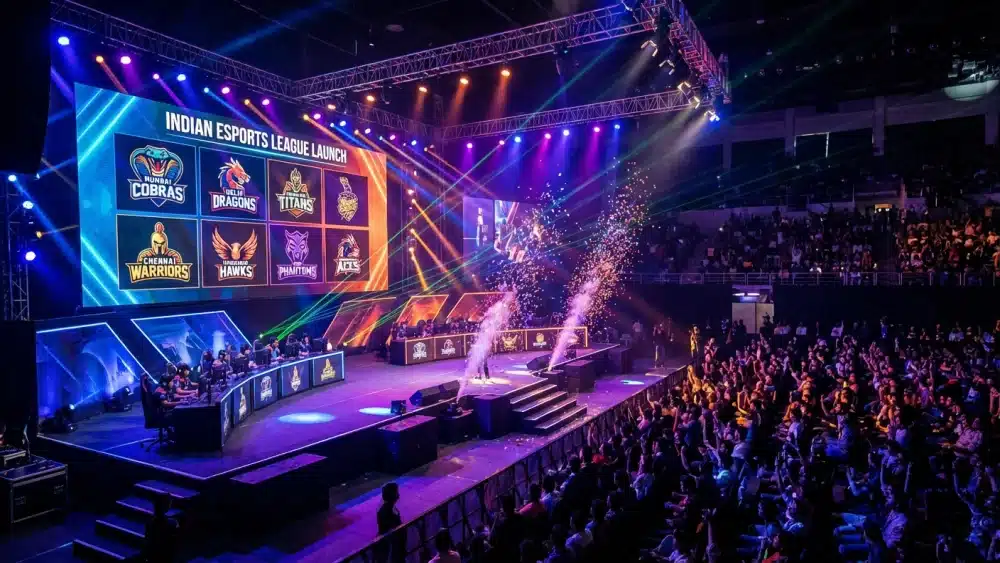
Indian esports has had plenty of one-off tournaments, but never a proper franchise league. The Indian Super Gaming League is changing that. Announced at a curtain-raiser event in Mumbai on March 1, ISGL will run its inaugural season from March to June 2026 with eight permanent teams.
The eight franchises
The team list reads more like an ISL or PKL roster than an esports org sheet. Mumbai City FC, FC Goa, Chennaiyin FC, Kerala Blasters FC, Inter Kashi FC, Puneri Paltan, Bangalore Bhargavas and Andhra Agneyas make up the eight founding franchises. Several of these are established brands from the Indian Super League and Pro Kabaddi League, now expanding into competitive gaming.
Five games, one league
ISGL will run competitions across Chess, Cricket 26, Call of Duty Mobile, FAU-G and FC 26. The mix reflects India's mobile-heavy gaming market while also including PC titles. It is a deliberate attempt to cast a wide net, covering both casual mobile audiences and competitive PC players.
How the season works
A nationwide qualifier circuit will identify emerging talent through city-level competitions before the main league begins. Matches will take place in Mumbai, Chennai, Goa and Lucknow, with the grand finale set for Visakhapatnam. Broadcasts will stream across OTT platforms and YouTube.
Bollywood backing and big names
The Mumbai curtain-raiser attracted Ranbir Kapoor and Abhishek Bachchan, both of whom have stakes in sports franchises. Their presence signals that ISGL's organizer, LetsGameNow, founded by Santanu Basu and Gautam Badalia, is targeting mainstream crossover appeal rather than just the existing esports audience.
Can the franchise model work for esports?
India's cricket and kabaddi leagues proved that franchise structures with city identities can build loyal fanbases. Whether the same formula translates to esports is an open question. Player salaries, broadcast deals and consistent audience turnout will determine if ISGL survives beyond its debut season. For now, the fact that established sports brands are investing gives the league a foundation that previous Indian esports ventures lacked.
When Peru’s Dota 2 squads like Thunder Awaken made a surprise top-six run at The International (TI), one truth rang clear: top play is no longer locked to North America, Europe, or East Asia. The map is shifting fast, with new regions rising on raw skill, passionate fans, and fresh ground to grow.
Factors fueling global esports growth
Esports is no longer bound to traditional hubs. It’s growing fast across the globe, with low-cost equipment, new funds, and strong fan drive sparking the rise.
If momentum is maintained, several factors can accelerate growth, such as:
More people playing on mobile: Affordable smartphones and free-to-play games have cut the cost wall, letting the masses join without pricey computers. This ease has pulled groups once shut out of the world of gaming.
Better internet and faster connections: Astronger, steadier internet connection is shifting casual play to serious grind. Regions once tagged 'offline' now stand in global tournaments.
Support from major teams and local leaders: Major organisations are scouting fresh talent hubs, while governments and investors treat esports as a growing industry. Together, they’re building training camps, leagues, and opportunities for aspiring players.
Streaming and social media boost player exposure: Platforms like Twitch, YouTube, and TikTok give players global exposure, where viral clips and live fan chats can fast-track fame and open new doors.
Rising esports nations to watch out for
South Korea, China, and the US still rule the lights, but the next big stories may rise from new soil. Dark horse nations are rising quickly, fueled by raw skill, fierce drive, and strong support, positioning them as the next true powers in esports.
From unexpected wins to young rising stars, these nations flip the script on who rules the stage. Here are the underrated esports nations that more fans should talk about:
Philippines
The Philippines now stands as a fast-rising hub, led by games like Mobile Legends, VALORANT, and Dota 2. Squads like Bren Esports highlight the Philippines’ growth in skill, with regional rivalries against teams like Indonesia’s Rex Regum Qeon (RRQ). What further lifts the country is their fierce, loud fans and mobile-first play, which makes the game open to all.
Vietnam
Vietnam has emerged as a serious esports force, excelling in League of Legends (LoL), PUBG Mobile, and Free Fire. GAM Esports shook LoL Worlds, showing the nation can match the best.
Their strength comes from sharp skills and growing support, backed by state aid and private funds. With focused training, new arenas, and a strong regional foothold, Vietnam is building a base to become a future power.
Brazil
Brazil has long been a powerhouse in esports, with a focus on Counter-Strike 2 (CS2), LoL, and Free Fire. Their teams often reach world finals, showing raw skill and fierce fight. The country has a huge, passionate fan base and a rich local scene.
However, hurdles such as thin funds and patchy internet can slow the rise. Still, Brazil’s steady talent flow and deep drive make it a nation the esports world must watch.
Mexico
Mexico is rising fast in esports, especially in the Latin American LoL scene and Free Fire. Their growth is fueled by sponsors, strong fan support, and wider access to gaming spaces.
Mexican players are also gaining regional fame, while grassroots events keep feeding the talent stream. With steady funds and active fans, Mexico is set to become a top force in Latin America.
Saudi Arabia
It's no secret that Saudi Arabia is quickly becoming a Middle East esports hub. Currently, they perform well in Fortnite, VALORANT, and PUBG Mobile. State funds support leagues, new arenas, and training hubs.
The focus is on pro gaming, providing opportunities for teams and players to reach global stages. With strong financial support and strategy, Saudi Arabia grows local talent and draws the world's attention.
Egypt
Egypt is rising as an esports nation, with growing CS2 and Fortnite scenes. Local events uncover and train young talent nationwide. Meanwhile, players gain skill and fame in regional contests, laying the foundation for Egypt to join the Middle East and North Africa (MENA) top ranks.
With more funds, better internet, and strong fan support, Egypt can challenge top nations and grow players ready for the world stage.
South Africa
South Africa is gradually staking its claim in esports, with rising play in Fortnite and LoL. However, the nation faces weak internet, few sponsors, and a small pro scene.
Despite these challenges, new players shine in regional matches, and local leagues gain momentum. Competitions and fan-led events grow talent and build a strong base. With steady funds and support, South Africa can boost its reach and compete on the global stage.
Romania
Romania is gaining ground in esports, especially in CS2, with a growing Dota 2 community. Local tournaments also give players space to grow and gain world stage experience.
A growing fan base, with more access to training and events, helps shape talent ready for global play. This push signals a bright future for Romanian esports.
Key challenges and future outlook
As esports expands worldwide, new nations show they could reach the top in a few years. However, growth is still not guaranteed, as these nations face hurdles that may slow their rise on the global esports scene.
Several challenges hinder nations from reaching their full potential, such as:
Lack of funding and sponsors: Many promising teams falter without steady funds. With few sponsors, teams lack access to proper training and competitive opportunities, slowing their growth.
Few chances to join major tournaments: New players often compete in local events, missing opportunities to face top global talent, which makes it difficult to adjust to elite, high-stress play.
Limited facilities and tech support: Inadequate gaming hubs, patchy internet, and few pro arenas block training and hosting events. These limits slow skill and fan growth.
Player retention challenges: Top players are often picked up by foreign teams with higher pay and better tools. This 'brain drain' can weaken domestic leagues and stall local esports growth.
Tomorrow's champions: Keep your eyes on the rising stars
A new batch of nations rises, ready to challenge the current esports giants. The scene feels fresh and wild, as global play brings new skills and styles to light.
From strong local scenes to state-backed programs, these rising nations shape esports’ next chapter. Watch closely, as new champions may hail from these slept-on nations, flipping the global map.
Fighting legends: The best FGC players of all time
The fighting game community (FGC) has been a foundational piece of esports. Throughout its history, there have been a few players who could be considered legends of their specific game and the rest of the genre.
These players have demonstrated exceptional skill and proven that fighting game players can reach the pinnacle of esports. It is as prestigious as other games within the esports industry. Discover the top players who could be considered all-time greats below.
Daigo Umehara
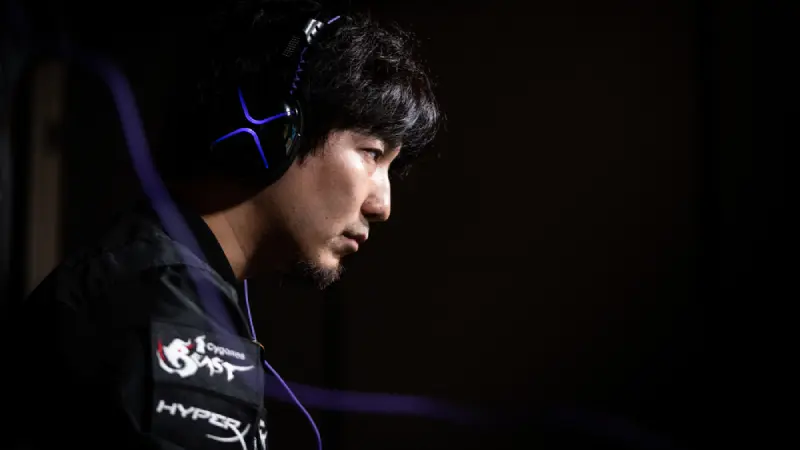
Arguably the most iconic name in fighting game history, Daigo Umehara became a legend with his performances. Known as ‘The Beast’, Daigo is best known for his iconic comeback against Justin Wong back in EVO 2004 during a Street Fighter III: 3rd Strike match. It is now known as Evo Moment #37, which continued to stay with both players since.
Beyond that highlight, Daigo is an accomplished Street Fighter player, having won championships and achieved notable results. He has been dominant across multiple games, including Street Fighter II, Street Fighter Alpha, and Street Fighter IV. Even though he has played across these games, he did not lose a step in any of them when he jumped.
As a player, Daigo always pushed the limits of his characters. He had a versatile skill set that made him a nightmare matchup. Across multiple games, Daigo stayed consistent as he had the adaptability of an elite player.
SonicFox
If Daigo is considered the icon of the older FGC players, SonicFox is the younger generation’s best representative. They are a standout in the FGC’s modern era as they have incredible versatility across many games. They were first known for their Mortal Kombat and Injustice runs, as they loved the NetherRealm games.
However, they made sure to transition into other games, becoming a champion in Dragon Ball FighterZ and Skullgirls. There are many more games he has done well in, which shows their prodigious talent for fighting games.
They have claimed many EVO titles, as he is celebrated for his skill on the sticks and being an influential figure outside of matches. They are one of the most complete fighting game players ever, and that will always stick with them.
Tokido
Another legend from Japan, Tokido is known for being one of the Five Gods of Fighting Games. He has been superb across many years due to his ruthless consistency. He succeeded in multiple titles, including Street Fighter, King of Fighters, and Tekken Tag Tournament.
The biggest breakout moment for Tokido was in 2017 when he won EVO in Street Fighter V. This proved he is one of the best Street Fighter players ever, as he is always prepared for tough matches every time he picks up the fighting game.
Dota 2 drama: Tundra Esports' roster change before TI 2025
For the third year in a row, Tundra Esports enters The International (TI) with a twist to its line-up. Support player Matthew ‘Whitemon’ Filemon will miss the stage in Hamburg after late visa issues cut his trip short. In his place, Austrian offlaner Tobias ‘Tobi’ Buchner steps in, tasked with holding the line when it matters most.
The move brings both doubt and hope to fans who know how slim the margins are at this level. Tobi has shown form with past squads and now gets his shot on the world’s top stage.
A pattern emerges: Tundra's third consecutive TI with a stand-in
Tundra’s path to TI often comes with last-minute team shifts. In 2023, Martin ‘Saksa’ Sazdov had to step back for health, and Topias ‘Topson’ Taavitsainen came in. That run saw the squad fall short, ending in 13th–16th place.
The following year, Edgar ‘9Class’ Naltakian was held back by visa rules, which brought Saksa back to the line-up. His return pushed Tundra to 3rd place, a sharp rise that proved they could still fight at the top.
A seasoned replacement amidst uncertainty
Tobi has played for top squads like Team Liquid and Entity, and he’s no new face on the big stage. His most recent win came in July at the FISSURE Universe: Episode 5, where he showed sharp form. That boost gives Tundra hope, even with Whitemon’s late step out.
The preparation time has been short, yet Tobi has spent the last days grinding with the team. The swap brings risk, but it also adds calm and skill from a vet who’s played at the peak. Fans now wait to see if this change sparks Tundra’s run or slows their push.
The road to Hamburg: Overcoming logistical hurdles
Whitemon’s visa snag has forced him to sit out TI 2025, a blow that shows how hard travel rules can hit pro play. Such issues are not rare, as many teams have faced the same roadblock when they cross lands to join key bouts. It’s a stark sign that preps off the map can shape what fans see on stage.
Tundra made clear their thanks to Tobi, who jumped in at short notice to fill the slot. The squad now aims to blend fast and keep their run on track. The mood in camp is calm yet firm, as they set sights on Hamburg with one eye on the prize.
Can adaptability lead to triumph?
As TI 2025 nears, the squad faces one more trial on their path. For the third year in a row, they play with a sub, which has sparked talk of a ‘stand-in curse.’ How they cope with this swap may set the pace for their run in Hamburg.
Fans and foes will watch if the squad can stay sharp with less prep. Each game will press them to blend fast and strike with a clear plan. In the end, the key mark will be if grit and skill can lift them past the curse and deep into the event.
Excellence under pressure: Dota 2’s best-ever teams
Professional Dota 2 has been around for well over a decade. During that timeframe, the esports scene has seen its fair share of amazing teams. A good metric to measure those teams is how they step up under pressure. A few squads have set themselves apart and left a mark on the game’s history.
Defining greatness in Dota 2
For a Dota 2 team to be considered great, it goes beyond the one-off victories. The best teams usually combine consistency across multiple events with an affinity for succeeding in this game’s biggest event, called The International. This is the most prestigious event in Dota 2 and arguably the entirety of esports.
OG
As one of the most popular teams in Dota 2 history, OG captured people’s hearts quite often during their heyday. From the mid-to-late 2010s, OG was a dominant side. They were winning many Valve Majors early on, but they could not get past their troubles at TI.
That was problematic enough that their co-founder and captain Tal ‘Fly’ Aizik left the team to join Evil Geniuses. This left co-founder Johan ‘N0tail’ Sundstein to pick up the scraps and lead the team as captain. It was a blessing in disguise as N0tail would form the team that would end up winning both TI8 and TI9.
This team was more than amazing; they were powered by a wholesome friendship between the players. It made them the prime example of a good Dota 2 team and a great esports story.
Team Spirit
Team Spirit has become the face of consistent top-level Dota 2 in the 2020s. They won TI in 2021. They might have lost in 2022, but they regrouped around their core of Illya ‘Yatoro’ Mulyarchuk, Magomed ‘Collapse’ Khalilov, and Yaroslav ‘Miposhka’ Naidenov, who have combined raw skill with superb discipline that made them into a modern powerhouse.
They also have two TI wins under their belt. This consistency across different years has made them one of the most feared teams in Dota 2 history. Team Spirit’s success has proven that youth, talent, and composure have helped them overcome the most seasoned opponents possible.
With most of this team still intact, they could surpass OG and become the definitive team in Dota 2 history.
Team Liquid
Few organisations in esports have showcased longevity like Team Liquid. They had the 2017 roster led by Kuro ‘KuroKy’ Salehi Takhasomi that won The International. Fast forward to 2024, they won TI again, albeit with a different roster led by the likes of Michael ‘miCKe’ Vu and Samuel ‘Boxi’ Svahn.
Team Liquid is the embodiment of enduring success in the history of Dota 2’s competitive scene. That sustained excellence across years and different rosters shows the org’s quality.
With the conclusion of the Esports World Cup 2025 this August 24, the proud victors from different titles and events have finally been announced. Fans around the world celebrated as top teams and players etched their names in esports history, showcasing months of preparation, skill, and passion. From high-stakes finals to unforgettable plays, the champions of this year’s tournament proved why they are deserving winners.
The Esports World Cup 2025
The 2025 Esports World Cup was held in Riyadh, Saudi Arabia, organised by the Esports World Cup Foundation (EWCF) and ESL FACEIT Group. It was the second edition of the event, which first began in 2023 as a rebranded and expanded version of Gamers8.
Each game had its own way of qualifying players or teams, but the finals all came together under the Esports World Cup. Along with the main tournaments, there was a Club Competition where esports teams earned points across different games to compete for the overall crown.
The winners of each event
Have a look at the teams and players who conquered the field and brought home the cash prizes:
CS2 update: Breaks knife animations and changes maps
CS2’s latest patch has caused a wave of disappointment in the player base. One of the most talked-about parts of the update is the shift to a new animation system, AnimGraph2. This change, while meant to improve gameplay flow, has caused many high-value knives to glitch.
Fans who paid large sums for rare skins like the Butterfly Doppler (Black Pearl) are now seeing broken blade flips, knives clipping through hands, and wrong blade angles. These aren’t small bugs, but are flaws that hit deep for players who care about style and detail.
Butterfly knife takes the biggest hit
The Butterfly Knife is known as one of CS2’s flashiest and most wanted knives. Cheap ones go for US$800 or more, while rare ones like the Gamma Doppler (Emerald) hit the US$22,000 mark. Right after the patch went live, clips of the knife behaving strangely spread online.
Players saw the blade flip backwards, vanish into arms, or bend at odd spots. It wasn’t just the Butterfly. Other knives like the Nomad, Flip, and M9 Bayonet also showed odd movement in clips posted by players. Valve has yet to fix the issue fully.
One pro, Justinas ‘jL’ Lekavičius, who is also a Natus Vincere (NAVI) content creator, was quick to share his thoughts. Though recently benched from top play, jL still tracks game changes closely. He said the patch 'ruined the Butterfly and AK' but did admit the new reload moves were well made.
AK-47 sound sparks mixed views
The AK-47 did not escape the changes either. Along with new animations, the sound of this popular rifle has changed. Some players welcomed the new feel. Others, like ex-pro Erik ‘fl0m’ Flom, were not pleased. He said the AK now sounds plastic and cheap. For long-time fans, this is not the first time CS sound has caused debate. Back in 2016, the AK sound was updated in CSGO, which also drew strong views. Sound is key in CS, and any change is bound to stir strong words.
Map updates: Adjust inferno, overpass, and train
While animations get most of the talk, the map changes may shape the game more. Inferno’s B site now has a wider Garden entry, giving CTs a better shot at taking it back. Before, CTs rarely tried to retake B, but now they can throw fire at Ts hiding by the new box. Over at A site, the old Balcony rail is back, forcing Ts to jump over and slow their push.
Train and Overpass also saw tweaks. Overpass got new angles at the A site truck, Heaven rail, and wall behind A. Train got boxes near Hell and Z, with barrels added to give AWP users a peek at Popdog and A main without much risk.
What’s next for CS2 players?
For now, players must wait to see how Valve deals with the broken knife's looks and odd sounds. Some love the new style. Others miss the old ways. However, if there’s one clear thing, CS2 changes will always get strong views, good or bad.
Unmatched influence: Esports’ most influential players ever
The esports world has seen many iconic players throughout the years. These players were not always the most dominant stars, but their impact shaped how their games are played and perceived today.
By identifying the most influential players across the esports industry’s history, you get a glimpse into the games and how they’ve changed over the years. Before looking at the top players, you must understand the characteristics first.
What makes a player influential?
Influence can have many definitions in esports, but it usually involves pioneering a play style in their respective game. At the same time, these are players who made people interested in the game and possibly got them to play.
Iconic players deserve all the praise they receive for their impact and how they inspired a newer generation. These names played significant roles in their chosen game’s history in esports.
Some players introduced their games to a new generation, and they were influential enough to grow the game. Now, have a look at the biggest names in certain esports that have left their mark on their games and the esports:
Danil ‘Dendi’ Ishutin (Dota 2)
Across Dota 2’s illustrious history, there have been many amazing players. Names like Amer ‘Miracle-’ Al-Barkawi and Sumail ‘SumaiL’ Hassan come to mind due to their success and influence. Before they stood out, Danil ‘Dendi’ Ishutin was Dota 2’s most prominent star.
He won the very first The International in 2011 with Natus Vincere, and he was the star player in the mid lane. Throughout the years, Dendi became popular with the variety of heroes and play styles he had as a mid laner. Most people associate him with Pudge, as he always had innovative ways to use the Meat Hook, including the legendary Fountain Hook game in 2013.
Dendi was also known for many playmaking heroes, such as Puck, Rubick, and Shadow Fiend. With his friendly demeanour and bubbly personality, Dendi became an endearing player that people wanted to watch, and he became Dota 2’s first superstar, whose play style remains influential today.
Christopher ‘GeT_RiGhT’ Alesund (Counter-Strike)
Counter-Strike dates back to the 2000s when 1.3 and 1.6 were the popular games. That was when Swedish player Christopher ‘GeT_RiGhT’ Alesund got his start, as he started playing in 2007. He stood out for Fnatic starting in 2009, winning multiple trophies before moving to SK Gaming.
However, GeT_RiGhT would get his biggest break as part of the Ninjas in Pyjamas (NiP) team in Counter-Strike: Global Offensive. It was a star-studded roster, but GeT_RiGhT was the team’s standout player. He was always pulling off the clutch plays, mostly coming from unexpected spots on the map.
He was an innovative player, as he pioneered the ‘Lurker’ play style. It is a style that focuses on control and non-aggression. A player with this style wants to catch their opponents off guard, and GeT_RiGhT did that with excellent timing and game sense.
It became such an influential style that even Valorant players have also played it in that role. Ayaz ‘nAts’ Akhmetshin’s play as a lurker in Valorant felt very similar to GeT_RiGhT, which cements his influence across different first-person shooter games.
Daigo Umehara (Street Fighter/FGC)
The fighting game community (FGC) is filled with all kinds of iconic players. For them, Daigo Umehara is a living legend. He specialised in 2D arcade fighting games, but Street Fighter was his most iconic game, where he is also considered arguably the greatest player.
In the Guinness Book of World Records, he is the most successful Street Fighter player ever, which is also backed up by his six Evo Championship Series wins. Many Street Fighter players look up to Daigo, as he proved that one could take over the game and become a legend. His influence is not only seen in SF, but in other fighting games too.
Known for his discipline, precision, and legendary game sense, Daigo is influential. The most iconic moment of his career is the legendary Evo 2004: Moment #37, when he parried an entire combo to snatch victory from the jaws of defeat. That brought new fans into the FGC, cementing his status as an influential FGC icon that other players look up to.
Hong ‘MadLife’ Min-gi (League of Legends)
Playing the support role is fun, but people have a bad perception of it as it is not flashy enough. That changed when Hong ‘MadLife’ Min-gi redefined what the role could do. He was a playmaking support, and that was evident with his performances on champions like Thresh and Blitzcrank.
Most of the time, people see the support role as a passive one. The players who play the support-based champions are usually behind the attack-damage carry (ADC) during team fights. That is not the case with MadLife, as he was usually the support player who initiated the fights, and was there on the frontline.
He would find ways to weave in and out of the fight to keep using his champion’s abilities. That required impressive game sense, and MadLife showed that support players are not replaceable, as they can also make significant plays on the same level as a top-laner or an ADC.
Matthew ‘Nadeshot’ Haag (Call of Duty)
Matthew ‘Nadeshot’ Haag was a top-tier Call of Duty player during his heyday, but his influence goes beyond the controller. He was a captivating player who had clutch performances, and he had a relatable personality to boot.
Although already a respected pro, his legacy grew even more after retirement when he founded 100 Thieves, one of the iconic esports organisations. Nadeshot is a competitive person, and that has bled into his org, content creation, and more. His business savvy turned him into the blueprint that esports players follow today.
Rumours of buyout surround team Falcons after roster signing
Speculations over another buyout by Team Falcons began swirling again in June 2025. The catalyst was the recent signing of Maksim ‘Kyousuke’ Lukin, replacing Emil ‘Magisk’ Reif as rifler. There is no official disclosure of how much the Saudi Arabian team has spent, but it is speculated to be up to $2 million, which the Falcons deny.
Signs of buyout that started the rumour in 2024
What prompted the rumours to start swirling in the first place? Most CS2 esports fans attribute it to the team’s past actions, particularly in the previous buyout spree. The most controversial was Nikola ‘NiKo’ Kovač for around $1 million in January this year. This time, Kyousuke is the centre of attention because his signing shows similar signs to NiKo’s case.
Those signs include sudden roster shakeups and increased organisational expenses. Kyousuke’s transfer is a big surprise, especially when the team has fresh arrivals along with NiKo, René ‘TeSeS’ Madsen, Damjan ‘kyxsan’ Stoikovski, and Ilya ‘m0NESY’ Osipov. This move put Falcons’ veteran Magisk on the bench.
The other sign is major investments as an organisation. Team Falcons has increased expenses across its esports franchises, including the aforementioned CS2 roster shakeup. Another notable investment was signing the former Team BDS roster in Rainbow Six Siege (R6) esports in March 2025.
Elaborate: What does ‘buyout’ mean in this context?
A ‘buyout’ is the payment a team makes to terminate a pro player’s existing contract so the player can join a different team. It’s a standard practice in professional sports and esports, but it can leave a negative impression depending on the context.
For example, Kyousuke’s signing is rumoured to be a controversial buyout because he showed no prior plans of transferring out, but suddenly he joined a new team. CS2 fans speculated that he was paid a hefty sum of up to $2 million, which Team Falcons denied.
A buyout can be seen negatively if the organisation is known to have a large budget and uses it to aggressively acquire top talent from other teams. For example, getting Kyousuke is seen by some as a harmful buyout because it significantly affects Team Spirit Academy’s popularity with the Chinese fanbase. Losing Kyousuke’s star power can hurt their viewership in future matches.
Team Falcons buyout: Fact or mere speculation?
Team Falcons denies all claims of a big-budget buyout. Chairman Musaed ‘Msdossary’ Al-Dossary stated that the cost was big, but not close to the rumoured $2 million. Kyousuke’s contract figures are still kept private. If true, the 17-year-old’s contract could carry one of the highest price tags in esports.
There are no formal confirmations, and if the rumours are true, Team Falcons is still unlikely to have breached any rules. Their aggressive market behaviour is under scrutiny, but it could simply be a sign of strong competitive ambition in esports. The CS2 community is closely watching this news, demonstrating their commitment to fair play in professional esports.
How to use Advance Server’s Bug Hunter Program to get free diamonds in Free Fire
Garena Free Fire’s OB49 update is now being tested on its Advance Server. This special testing server lets players try out new features before they are released worldwide. It also gives players the chance to earn free diamonds by helping Garena find bugs. Here’s how to join the OB49 Advance Server, access the game’s new content early, and claim diamond rewards through the Bug Hunter Program.
Free Fire diamond hack in Garena Advance Server
Many players look for ‘diamond hacks,’ but the only safe way to get free diamonds is through Garena’s official program—an Advance Server used for testing will offer a bug hunting program that will reward you with diamonds.
Garena’s Bug Hunter Program pays out up to 100 diamonds if you’re the first to report a new bug. To do this:
Step 1: Play on the Advance Server and look for glitches or problems.
Step 2: Report the bug on the Advance Server site.
Step 3: Input your details like your UID, phone model, and clear screenshots or videos.
If your report is accepted and the first of its kind, Garena will send diamonds to your main Free Fire account after the server period ends. Avoid third-party APKs or so-called ‘diamond hacks,’ as they can steal your data or get your account banned.
How to download the Advance Server
Once an Advance Server is available, here’s how to download it:
Register:
Visit the official site (which will be announced if one is available)
Log in with your Free Fire-linked Facebook or Google account.
Fill in your details and submit the form.
Wait for an email or in-game message with your activation code.
Download & install:
Go back to the site and click Download APK to get the Advance Server file (about 700 MB – 1 GB).
Allow ‘Install from unknown sources’ in your settings.
Install the APK and open it.
Test & report:
Explore all the new features, maps, and characters.
Look out for bugs and report them to earn free diamonds.
After the server closes, Garena reviews bug reports and credits diamonds to players who helped find problems.
SportsAdda uses cookies to enhance your experience. By continuing to use this website, you agree to our use of cookies.

![3 SEPT_ Article 3 [500] Feature_ Esports-banner](https://www.sportsadda.asia/wp-content/uploads/2025/09/3-SEPT_-Article-3-500-Feature_-Esports-banner.webp)